Traveling with young children is stressful enough without wondering whether your airport pickup or limo transfer is legally required to have a car seat installed. If you're a parent in Brampton or anywhere across the GTA booking transportation for your family, this guide breaks down what Ontario law actually says - and why relying on the legal minimum isn't always the safest choice.
Note: This article is for general information only and isn't legal advice. Laws can change, so always confirm current requirements with the Ontario Ministry of Transportation or a qualified professional if you have specific concerns.
Car seat laws in Ontario at a glance
Ontario's car seat rules are set by your child's weight, height and age, not by age alone. The driver must make sure every passenger under 16 is properly secured.
| Child's size | Seat required in Ontario |
|---|---|
| Under 9 kg (20 lb) | Rear-facing car seat |
| 9 to 18 kg (20 to 40 lb) | Car seat with a harness that is properly adjusted and fastened (forward-facing once your child has outgrown the rear-facing limits of the seat) |
| 18 to 36 kg (40 to 80 lb), under 8 years old and under 145 cm (4'9") | Booster seat used with the vehicle's lap and shoulder belt |
| 8 years old, or 36 kg (80 lb), or 145 cm (4'9") tall | Seat belt alone, if it fits across the shoulder and hips |
Many 2- and 3-year-olds fall in the 9 to 18 kg (20 to 40 lb) range, so they need a harnessed car seat, and many seats let them stay rear-facing longer, which is safer. Check the limits printed on your seat.
The Basic Rule for Private Vehicles
Under Ontario's Highway Traffic Act and Ontario Regulation 613, children must be secured in an age- and size-appropriate restraint until they meet certain thresholds. The general stages look like this:
- Rear-facing car seat - required from birth until the child weighs at least 9 kg (20 lbs)
- Forward-facing seat with harness - required from roughly 9 kg up to 18 kg (20–40 lbs)
- Booster seat - required from 18 kg up to 36 kg (40–80 lbs), while the child is under 8 years old
- Seat belt alone - permitted once the child turns 8, reaches 36 kg (80 lbs), or reaches 145 cm (4'9") tall, whichever comes first - provided the seat belt fits properly across the shoulder and hips
For everyday driving in your own vehicle, these rules are strictly enforced. Non-compliance can result in fines and demerit points, and the driver is responsible for ensuring passengers under 16 are properly restrained.
The Exemption Most Parents Don't Know About
Here's where it gets important for anyone booking airport transportation: section 8.1 of Ontario Regulation 613 exempts the driver of a taxicab, bus or public vehicle while transporting a passenger for hire from the child seat rules above. The driver doesn't have to provide or use a car seat or booster seat.
In plain terms, a licensed taxi driver could legally pick up your family at Toronto Pearson Airport and seat your child using only the vehicle's seat belt, with no car seat and no penalty for the driver.
A few important clarifications:
- The exemption names taxicabs, buses and public vehicles, not private vehicles. Limousines and rideshare are not named, so whether a particular limo or Uber ride is covered depends on how that vehicle is licensed. Don't rely on the exemption: plan for a car seat.
- Uber and Lyft: rideshare isn't named in the exemption, and you can't count on a car seat being in the vehicle. If you use rideshare with a young child, bring your own seat and install it yourself.
- The exemption does not apply to a taxi or small public vehicle under contract with a school board to take children to or from school. In that case, the standard car seat rules apply.
- The exemption removes the driver's legal obligation - it does not make the ride any safer. The physics of a collision don't change because of a regulatory carve-out.
- The only other exemption is for a person who can't wear a seat belt because of a certified medical condition or physical characteristic.
Why the Exemption Exists
The reasoning behind this rule is largely practical. Taxi drivers carry a constantly changing mix of passengers throughout the day, and it was considered impractical to require every vehicle to carry every size and type of car seat for every possible child passenger. The exemption was designed so families aren't stranded if a suitable seat isn't available - not as an endorsement of skipping restraints altogether.
Why This Matters for Airport Pickups Specifically
Families arriving at Pearson Airport are often exhausted, jet-lagged, and managing luggage, strollers, and tired kids all at once. It's precisely the situation where the car seat question gets overlooked - until you're standing at the curb with a toddler and no restraint in sight.
Because the legal exemption exists, you cannot assume a taxi or limo will have a car seat ready for you. If a seat isn't specifically arranged in advance, you may be offered a ride with just a seat belt, or in some cases, a driver may decline the trip altogether if you show up expecting one to already be installed.
What Responsible Parents (and Responsible Limo Companies) Actually Do
Because the exemption is a legal minimum and not a safety recommendation, the safest and most reliable approach is to treat car seats as a requirement regardless of what the regulation technically allows. This means:
- Pre-booking a car seat with your limo reservation, specifying your child's age, weight, and height so the correct seat type is provided
- Bringing your own car seat if you're traveling with one and prefer to use a seat you already trust and know how to install
- Confirming installation practices - ask whether the chauffeur or company follows manufacturer installation guidelines and inspects seats for wear or recalls
- Asking about seat cleanliness and condition, especially for shared or rental fleet seats used across multiple families
- Avoiding last-minute assumptions - don't assume a car seat will simply be available; confirm it in writing when you book
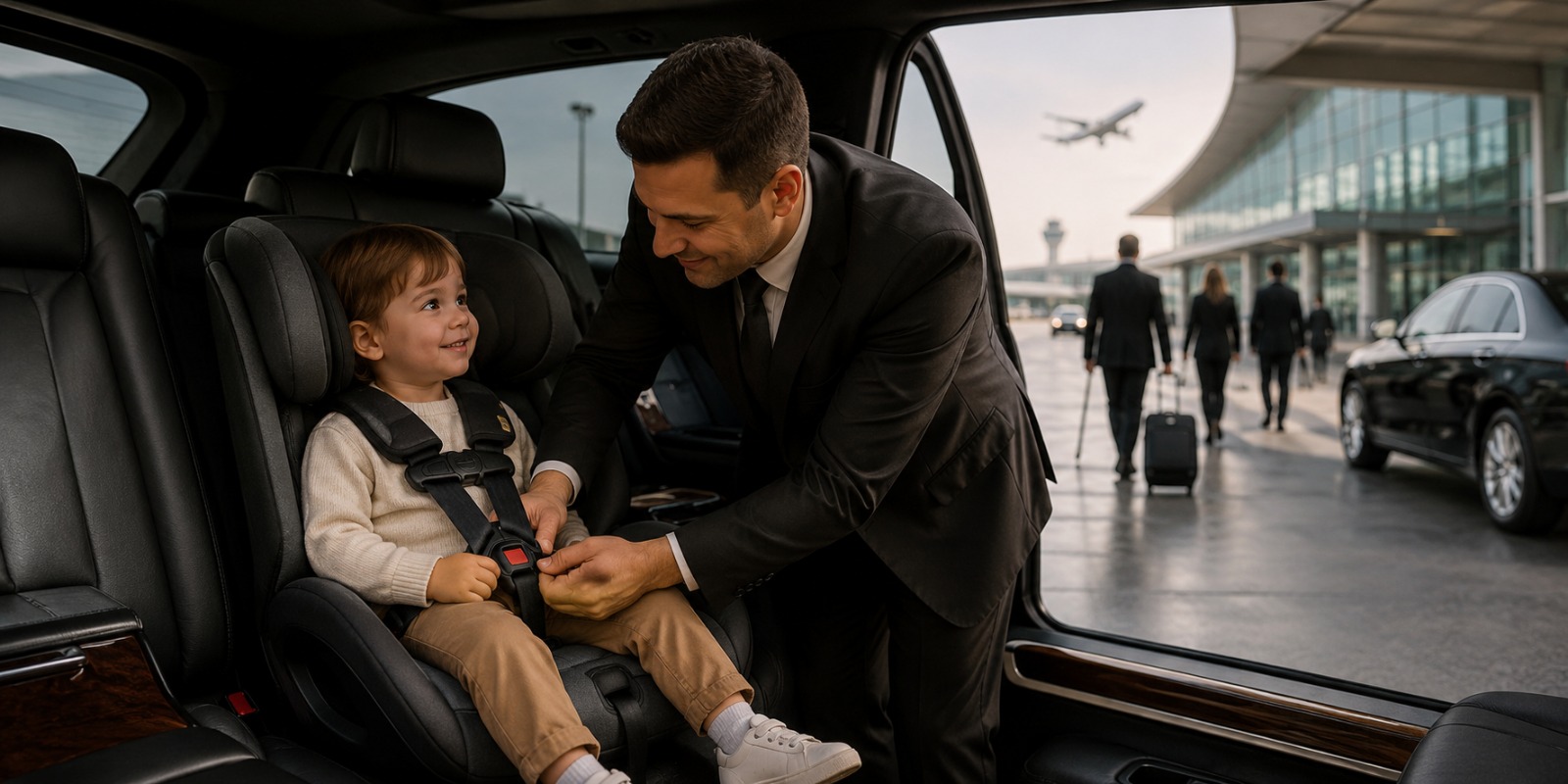
A professional Brampton limo company serving families in Brampton and the GTA should be able to offer a range of properly installed, age-appropriate seats - infant, forward-facing, and booster - as a standard add-on for airport transfers, not an afterthought.
Taxi vs. Uber vs. Limo: Car Seat Rules Compared
| Exempt from Ontario car seat rules? | Car seat availability | |
|---|---|---|
| Licensed taxi | Yes, the driver is exempt while carrying a passenger for hire | Not guaranteed unless pre-arranged |
| Limousine | Not named in the regulation; depends on how the vehicle is licensed | Can usually be pre-booked with the reservation |
| Uber / Lyft | Not named in the regulation | Don't count on one; bring your own seat |
| Private vehicle (your own car) | No | You provide and install it |
Car seats in taxis, Uber and limos: common questions
Do children need car seats in taxis in Ontario?
Not by law. The driver of a taxicab carrying a passenger for hire is exempt from Ontario's child seat rules. The exemption doesn't make the ride safer, so for babies and young children, bring a seat or book a taxi or limo that provides one.
Can I take a taxi without a car seat?
Yes, a licensed taxi can legally carry your child without a car seat. For an airport run with a baby or toddler, it's safer to book a ride with the right seat already arranged.
Do you need a car seat in an Uber in Ontario?
Rideshare isn't named in the exemption, and Uber and Lyft drivers usually don't carry child seats. Bring your own seat and install it before you set off.
Can you put a car seat in a limo?
In a sedan, SUV or van, yes: a car seat or booster fits a forward-facing seat with a seat belt or anchors. Stretch limousines often have side-facing bench seats, where a car seat can't be installed safely, so for young children choose a sedan, SUV or van and ask for the seat when you book.
What does the law say for children who weigh 9 to 18 kg (20 to 40 lb)?
They must ride in a car seat with a harness that is properly adjusted and fastened. Many seats let children in this range stay rear-facing longer, which is safer.
What are the booster seat requirements in Ontario?
Children from 18 to 36 kg (40 to 80 lb) who are under 8 years old and under 145 cm (4'9") must use a booster seat. They can move to a seat belt alone once they turn 8, reach 36 kg, or reach 145 cm, as long as the belt fits across the shoulder and hips.
Are the rules different in Toronto or other Ontario cities?
No. Car seat rules come from Ontario's Highway Traffic Act, so the same rules apply in Toronto, Brampton, London, Sudbury, Kincardine and everywhere else in the province.
Booking an airport ride with a child seat
With Aroma Limo you can add a rear-facing, forward-facing or booster seat as an extra when you book, and your chauffeur arrives with it already installed. Tell us your child's age, weight and height so we bring the right one, or bring your own seat if you prefer.
See our airport transfer with a child seat or book your ride online.
The Bottom Line
Ontario law gives taxi drivers carrying passengers for hire an exemption from car seat requirements, but that exemption exists to prevent families from being stranded, not to suggest car seats are unnecessary. For anything beyond a short trip, and especially for airport transfers with young children, the safest choice is always to arrange an appropriate, properly installed car seat in advance.
If you are booking a limo for an airport pickup, family event, or any trip with children in Brampton or across the GTA, ask directly: "Can you confirm the exact car seat type you'll provide, and how it will be installed?" A reputable company will answer that question clearly and without hesitation.
Last reviewed: October 2026. Source: Ontario Regulation 613 (Seat Belt Assemblies) under the Highway Traffic Act, sections 8 and 8.1.